
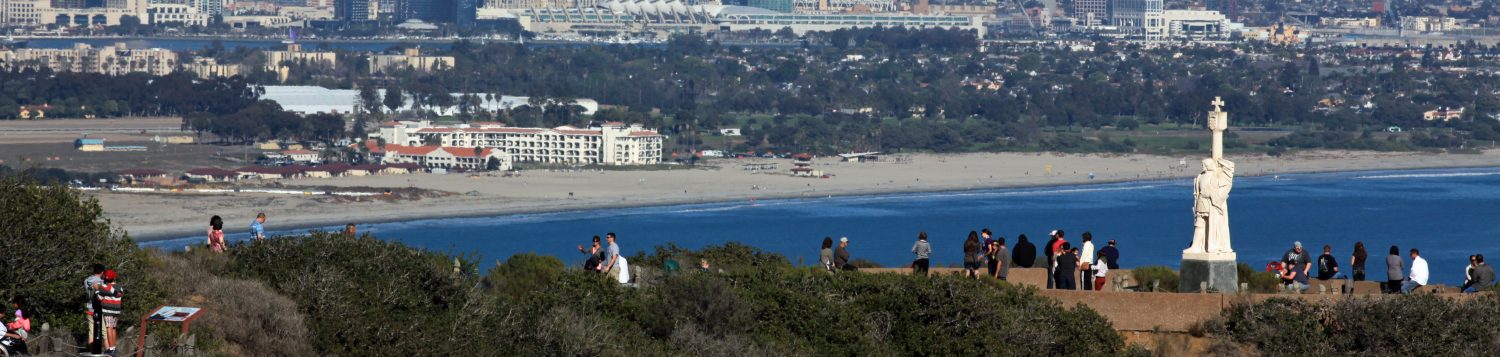

The first desalination plant in California was constructed at the tip of Point Loma in the 1960s. The plant was built in an area adjacent to where the current Cabrillo tidepool parking lot is located. NAVWAR now occupies the buildings where the desalination plant existed.

Let’s dive into the history of this plant and how it came to be built in Point Loma.
The United States Government realized that fresh water was going to become a problem in arid populated areas as the country continued to expand. In 1958, Congress directed the Secretary of the Interior to select from the known desalting processes the five best that had a chance of being economically feasible. The Office of Saline Water, a branch of the Department of the Interior, was tasked with this project by the Secretary.
Desalination is the process of taking seawater and separating it into two by-products, distilled water and a brine solution. As with any process, there are both positive and negative effects. Positives include the fact that distilled water is extracted from sea water. Negatives include how to properly dispose of the brine product as a result of the separation process.
We will discuss that a little later.
One of these five desalination processes was chosen, and the State of California and the Federal Government shared equally in the cost to build a test facility at the tip of Point Loma. The City of San Diego also assisted by constructing a 4-mile pipeline and pumping plant to carry the distilled water to the nearest reservoir on Point Loma. The desalination plant was completed in November 1961 and put into full operation in March 1962. A private company called Burns and Roe operated the plant. The average output was 650,000 gallons per day with a maximum output of 1.4 million gallons per day.
Seawater was the input into the plant. The output was distilled water which was delivered to the City of San Diego, where it was mixed with the local water supply on Point Loma. There were two waste products as a result of the desalination process. One was seawater that had been used as cooling water for heat rejection, so it was at a higher temperature than the “normal” seawater temperature. The other waste product was brine. The brine was essentially at the same temperature as the cooling water, that is, warmer than the incoming seawater, and 1.5-2 times more salty than the incoming seawater.
These two waste products were returned to the ocean through two separate pipes. These pipes extended to the edge of the cliffs, (where the current NAVWAR buildings overlook the tidepool area). The waste products were then dumped into the ocean.
Before the plant was built, the San Diego Regional Water Pollution Control Board issued recommendations for the wastewater discharge. One of the recommendations included:
“The toxicity of the discharge shall not exceed the following limit: when one part of waste is diluted in four parts of sea water, the mortality of the mixture among suitable marine test organisms after 48 hours exposure shall not exceed 50 percent.”
After a few months of operation, it was observed that the waste discharge had a negative effect on plant and marine life in the intertidal area. An intertidal study was conducted in the fall of 1962. The increase in salinity as well as the elevated water temperature was detrimental to life in the immediate area. This was also dependent on the tide level at the time. When the waste products were mixed with seawater at higher tides, it got diluted quicker in the seawater and had a lower impact on marine life. At low tides, the effects on the marine life were more pronounced.
While the marine species in the intertidal were not important commercially, it was obvious that the balance of nature where the discharge was occurring was disturbed. This was a clear warning that the problem would have to be resolved before commercially large-scale desalination plants could be put into production. In addition, the intertidal area off Point Loma had a protected status since it was a portion of Cabrillo National Monument.
The recommendation that the San Diego Regional Water Pollution Control Board mentioned above required that a toxicity test be done. This sort of test had not been developed previously, so standards and procedures had to be created. The Office of Saline Water contracted with Marlil Labs, who worked with Scripps Institute of Oceanography to create these testing procedures.

As a result of this survey, the toxicity testing in the labs and continued observations in the intertidal area, it was decided by the Office of Saline Water to combine the discharged products into a single stream and reroute it to deeper water so that it would always discharge under water. This would allow it to get diluted with the surrounding seawater, minimizing negative effects on intertidal life.
Then in 1964, things changed dramatically.
Lyndon Johnson had been president less than three months when on February 6, 1964, just over a year after the Cuban Missile Crisis, Cuban President Fidel Castro announced he would cut off the sole water source of the US naval base at Guantanamo Bay if the US did not release 36 Cuban fishermen who had been arrested for illegally fishing near Florida.
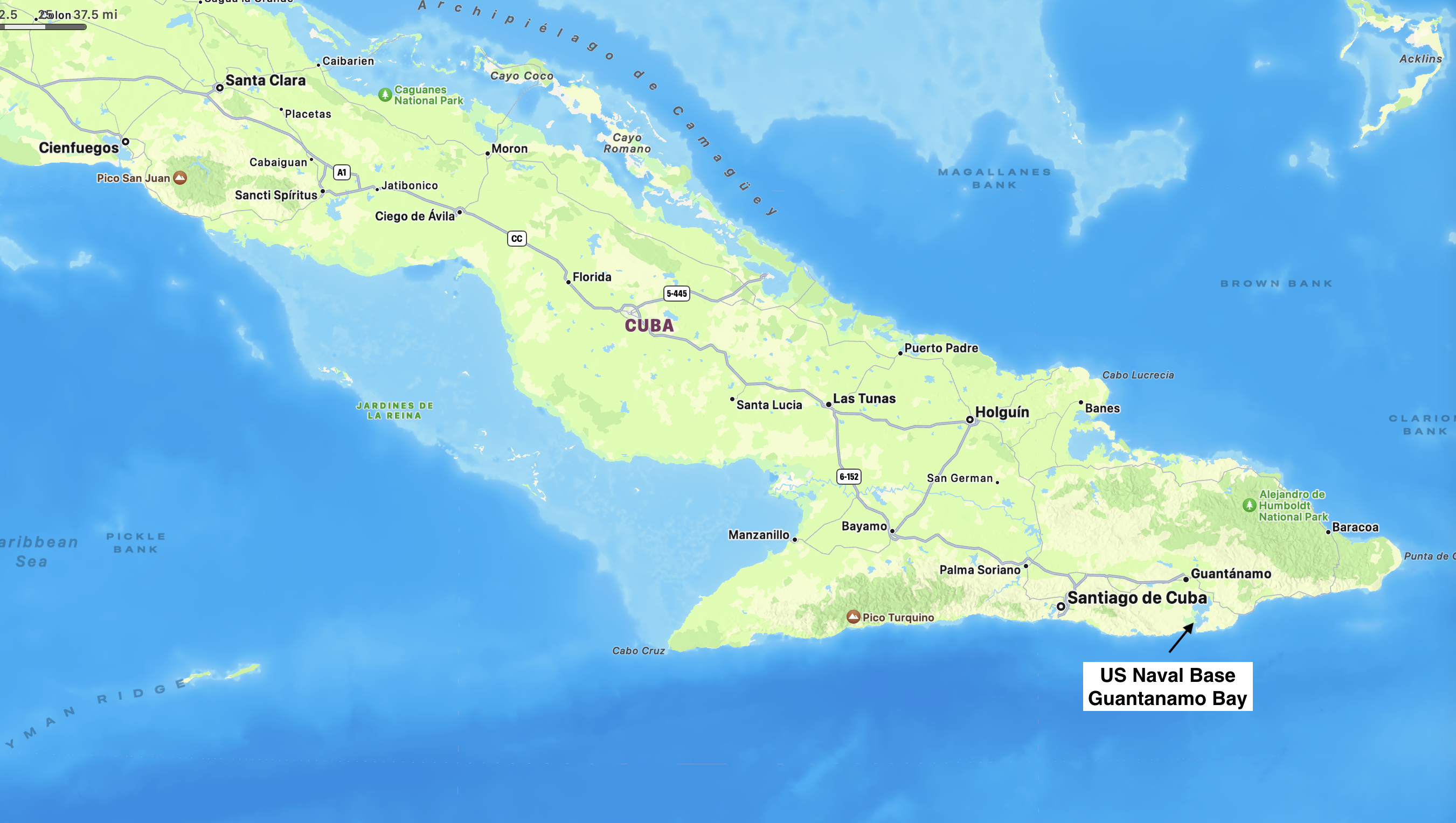
Rear Admiral John Bulkeley, base commander, immediately put the base on water restrictions, requested barges to bring water from the US and Jamaica, and canceled personnel inspections to save water on uniform laundering. Even though Castro said he would allow water to flow on base one hour per day for humanitarian reasons, Bulkeley directed that the flow – which came into the base at the installation’s only accessible land corridor with the rest of Cuba – be completely secured.
The crisis evolved quickly over the next ten days. On February 8, an inspection team from the Joint Chiefs of Staff arrived to survey the situation and the possibility of installing a desalination plant to convert seawater.
On February 14, fourteen international news media representatives arrived. Finally, the Cuban government asserted the Naval Base was “stealing” water from the pipe leading from Communist Cuba.
With that last public accusation, Bulkeley decided on an urgent, creative solution: he gathered the visiting newsmen, brought them to the spot where the water pipe came into the base, and had two Cuban workers cut open the water pipe. The U.S. Navy News Release from Naval Base Guantanamo Bay, Cuba, dated February 27, 1964, read that the base commander ordered that the pipe be cut and sealed “…to let the world know that the United States was not receiving water from Communist Cuba.”
The installation would, for the next year, have its water delivered by tanker and then, in time, be serviced by a desalination plant.
The Johnson Administration learned about the desalination plant in Point Loma and ordered that the plant be disassembled, moved and reassembled at Guantanamo Bay. Piece by piece it was disassembled, packed and shipped and ultimately rebuilt. To this day it is still producing water for the military base in Cuba. After an upgrade to a reverse-osmosis system in the early 21st century the plant can produce up to 1,500,000 gallons per day. The plant consumes close to ten million dollars of fuel per year. The water produced by the plant tastes bad and has a strange color.
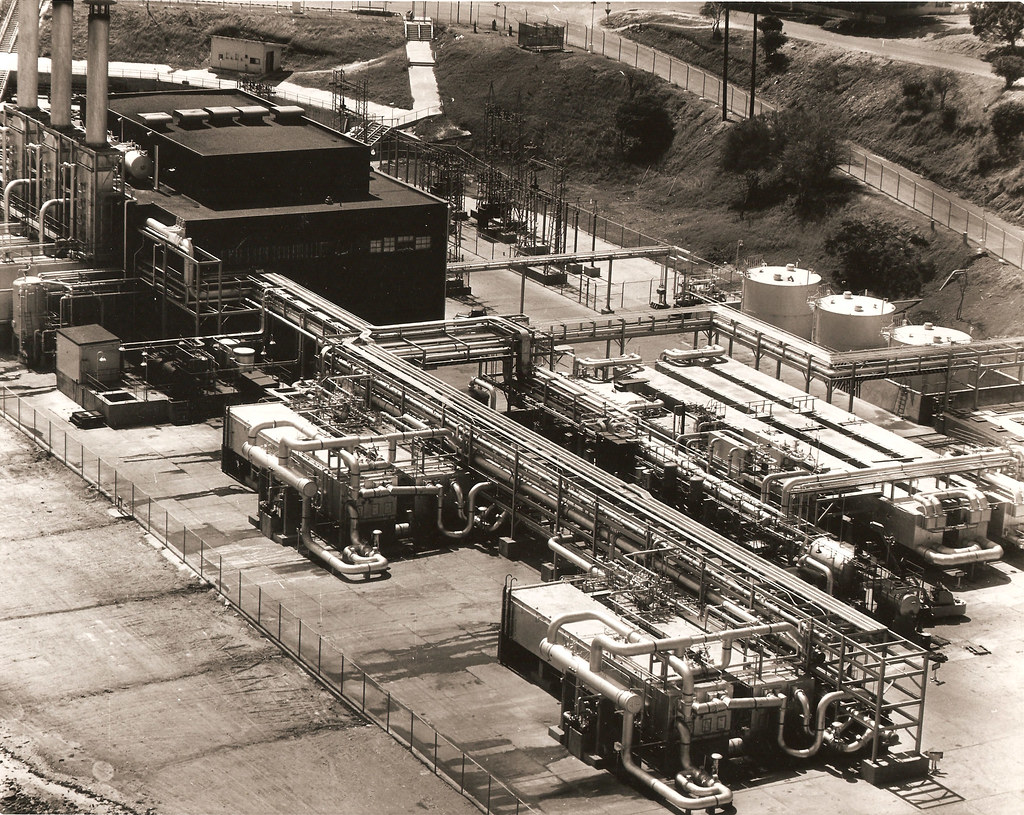
After the Point Loma plant was shipped to Guantanamo Bay, a newer desalination plant opened in Chula Vista in August 1967. The Clair Engle Desalting Plant was an experimental test facility built by the Department of Interior capable of producing one million gallons of fresh water daily.
In 1973 federal funding dried up and the Chula Vista plant closed. After the city council decided it was cheaper to buy imported water, San Diego turned down an offer to take over operating the facility.
A study done in the Point Loma tidepools in 1967, three years after the plant was closed down, showed that the affected area had regenerated rapidly in terms of marine life.
It should also be pointed out that in the area where the desalination plant was built, the land has been used for other purposes over the years. In the 1970s and ’80s, there were dolphin tanks where dolphins were getting trained by the Navy. That’s also where one of the surfing spots outside of Cabrillo got the name “Dolphin Tanks”.

Currently NAVWAR occupies the buildings.
And so ends the story of the first desalination plant in California at the tip of our beloved Point Loma. It also gives an historical connection between Point Loma, Cuba and Guantanamo Bay. Did you know about this piece of history?
References:
Effects of Waste Discharge from Point Loma Saline Water Conversion Plant on Intertidal Marine Life, David Leighton, I. Nusbaum and Stewart Mulford, 1967, https://www.jstor.org/stable/25035967
Desalination at the Guantanamo Bay Naval Base, https://en.wikialpha.org/wiki/Desalination_at_the_Guantanamo_Bay_Naval_Base
Desal Plant Dedication Will Be Held Tomorrow, 1967, https://www.sandiegouniontribune.com/news/local-history/story/2022-08-19/from-the-archives-chula-vista-desalting-plant
Naval Information Warfare Systems Command, https://en.wikipedia.org/wiki/Naval_Information_Warfare_Systems_Command
California-Drought-Brown-Water-Restrictions, 2015, https://web.archive.org/web/20150322010139/http://www.utsandiego.com/news/2015/mar/21/california-drought-brown-water-restrictions/
An Interesting Bit of San Diego Historical Trivia, William Johnson, https://activerain.com/blogsview/370019/an-interesting-bit-of-san-diego-historical-trivia-
Dry Pipes, Liberated Water, and Struggles for Legitimacy: A Lesser-Known Story of the United States in Cuba, February 29, 2024, J. Overton, https://irregularwarfare.org/articles/dry-pipes-liberated-water-and-struggles-for-legitimacy-a-lesser-known-story-of-the-united-states-in-cuba/
Guantanamo Bay Gazette, 2014, https://ufdcimages.uflib.ufl.edu/UF/00/09/86/16/01296/UF00098616_01296.pdf
Saline Water Conversion Demonstration Plant Number 2, San Diego, California, Annual Report, Volume 1, 1964, https://digital.library.unt.edu/ark:/67531/metadc11652/m1/?page=2
 CNM VIP Voice
Fascinating sbd little known history.