

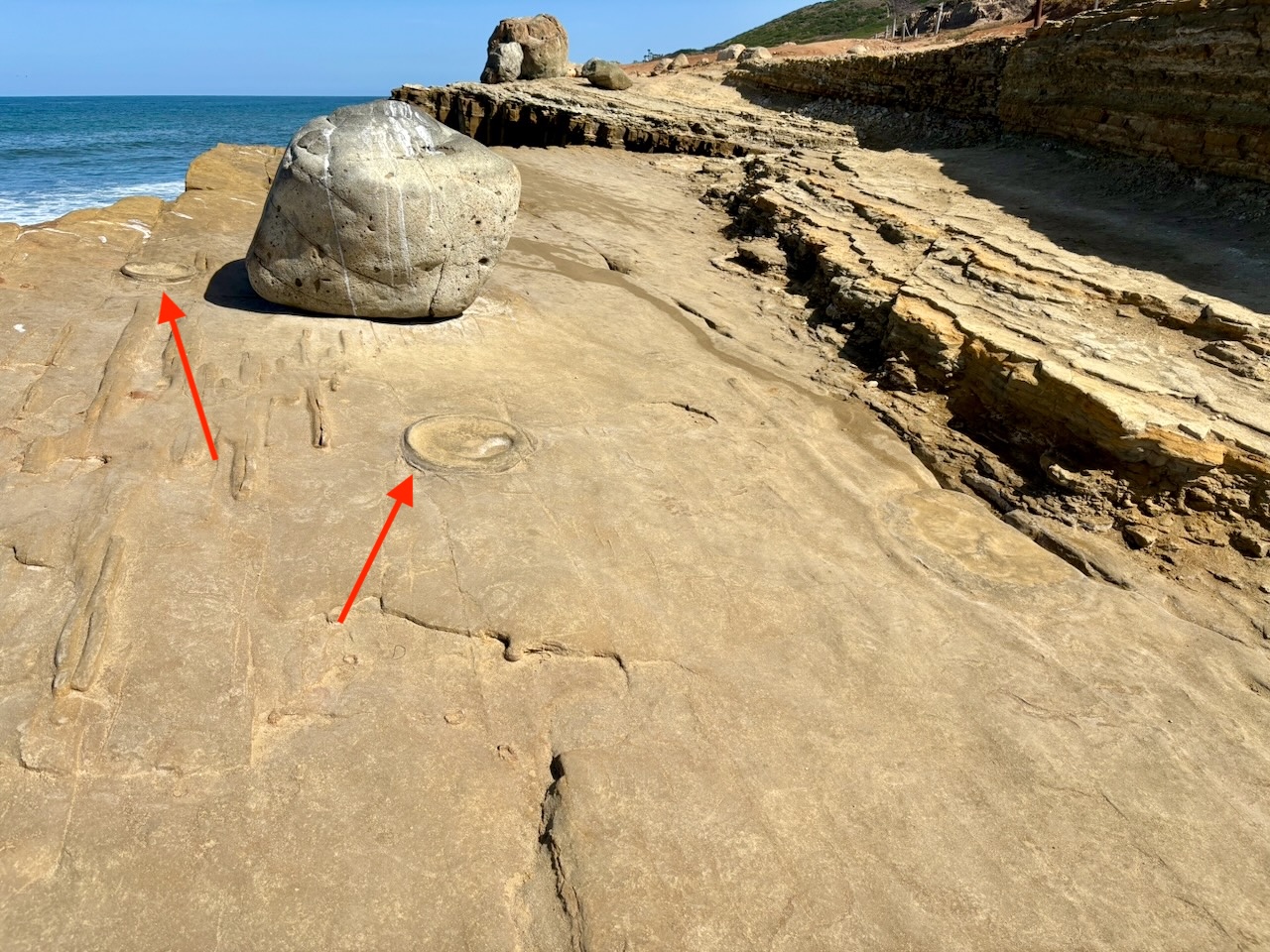
Have you noticed those circles around the tidepool entrance? They’re not dinosaur footprints or asteroid impact craters. They’re concretions, a fascinating geological feature. Let’s dive into what makes them so special.
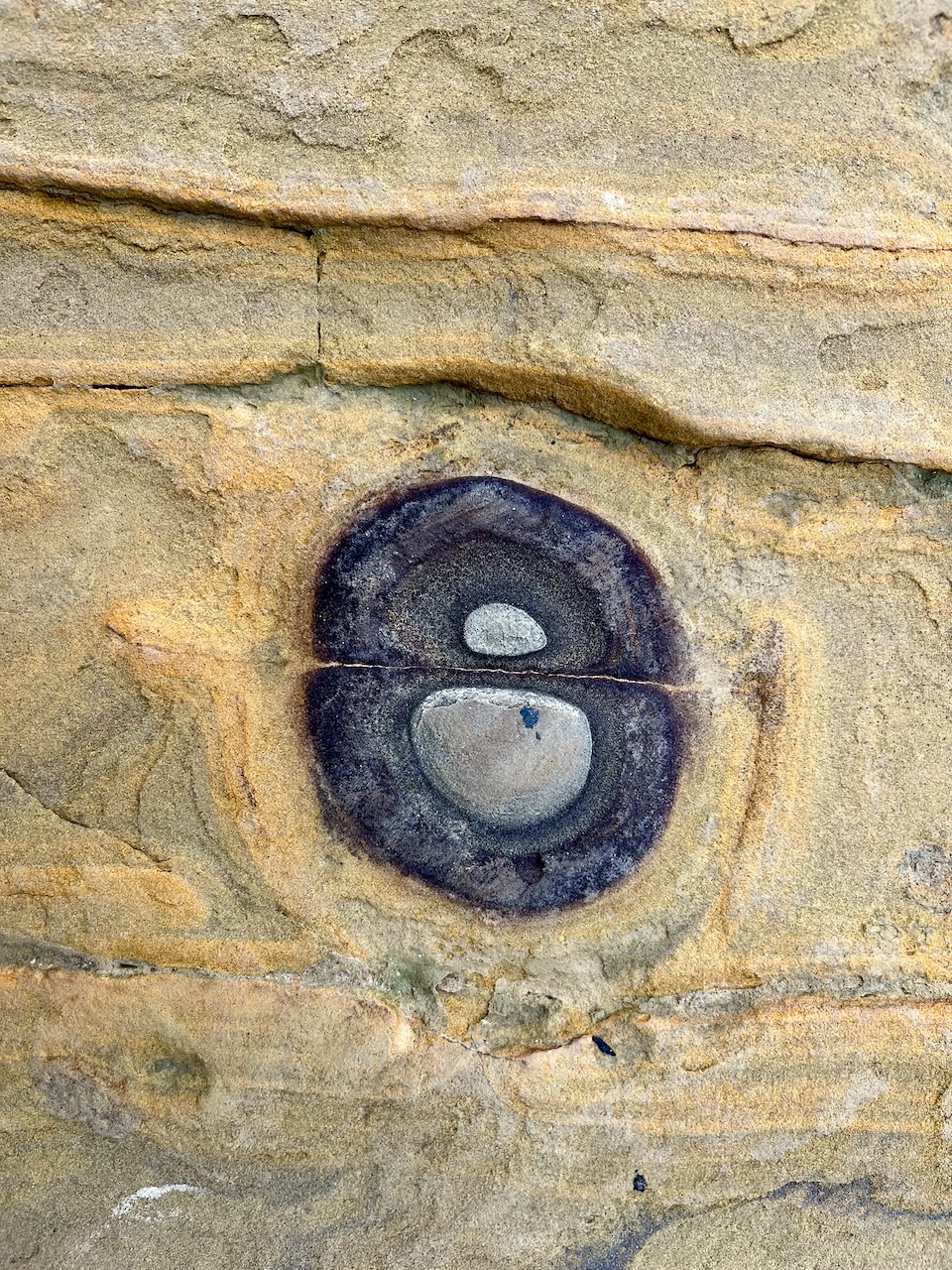
A concretion is a solid, tightly packed mass of minerals that forms inside sedimentary rock, often with a round shape. Concretions happen when minerals from groundwater settle and stick the sediment together, usually around something like a fossil, shell piece, or organic matter. These mineral deposits make the concretion tougher to erode than the rock around it.
Concretions form in a few steps:
- Sediment Deposition: Layers of mud, silt, and sand pile up, often in a sea or lake.
- Mineral-Rich Water Circulation: Water in the sediment carries dissolved minerals like calcite or iron oxide.
- Localized Cementation: Minerals settle around a central object or along certain areas, turning the sediment into a concretion before the rock around it fully hardens.
- Exposure: Erosion eventually wears away the softer layers, showing off the stronger concretions.
In the Point Loma Formation at Cabrillo National Monument, you’ll often find concretions nestled in the soft sandstone and siltstone. This formation, part of the Late Cretaceous sedimentary rocks (~70 million years old), has big, rounded concretions that often weather out along cliffs and coastal areas. It probably started when mineral-rich fluids moved through the loose marine sediments, cementing specific areas into solid masses. Now, these concretions pop out against the eroded cliffs and are a key part of the park’s amazing coastal geology.
Most concretions are round, oval, or disk-shaped, but you’ll also see some with unusual shapes.
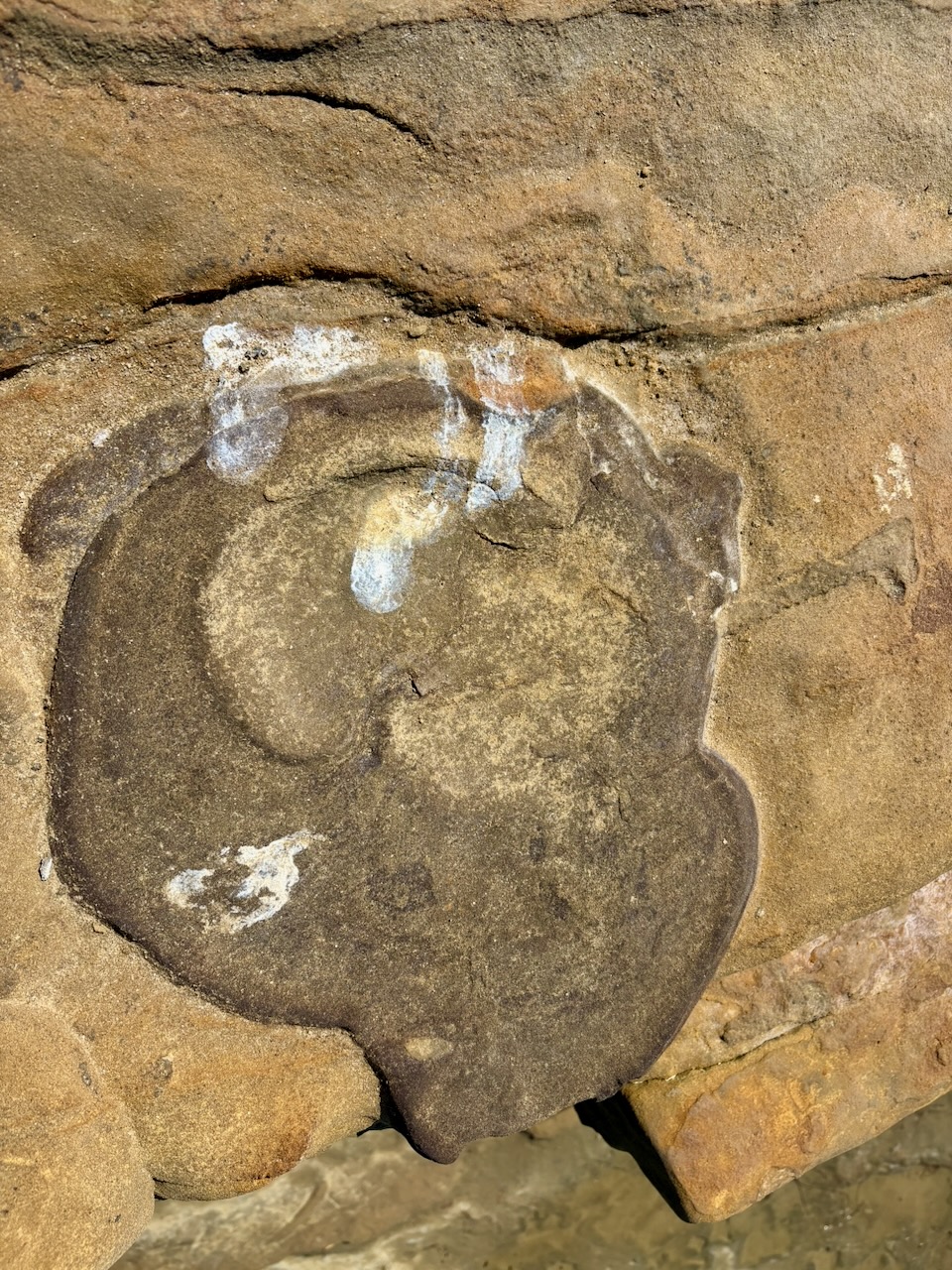
These formations are often made of silica, calcite, or iron minerals, which gives them a tough, erosion-resistant surface compared to the rock they’re in. You might see them around, often mistaken for fossils like dinosaur eggs, turtle shells, or bones.
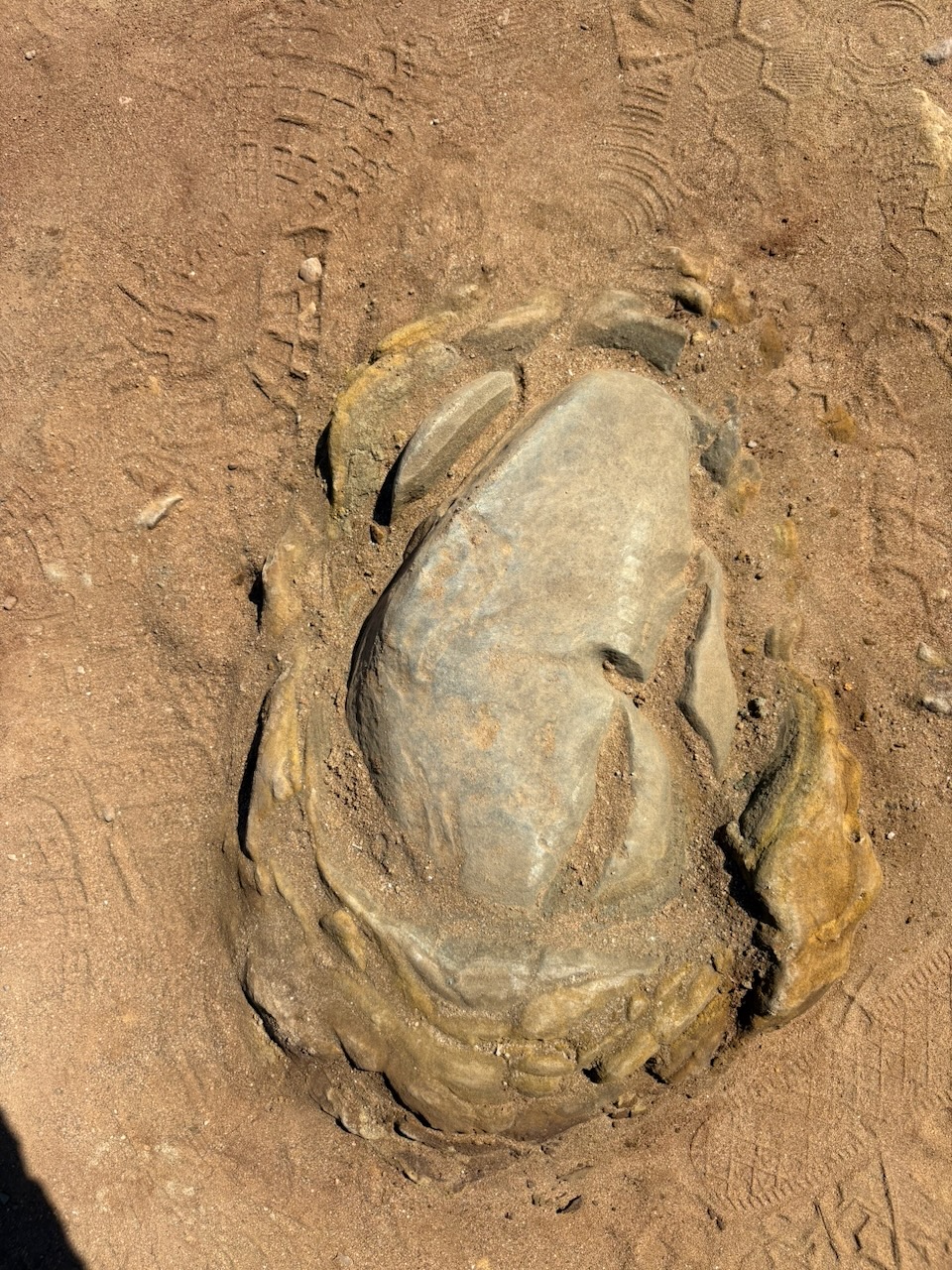
What makes them stand out is that they’re much harder than the softer sand or sandstone around them.
Some calcareous concretions, like septarian nodules, can develop cracks that create a segmented look, similar to a turtle shell.
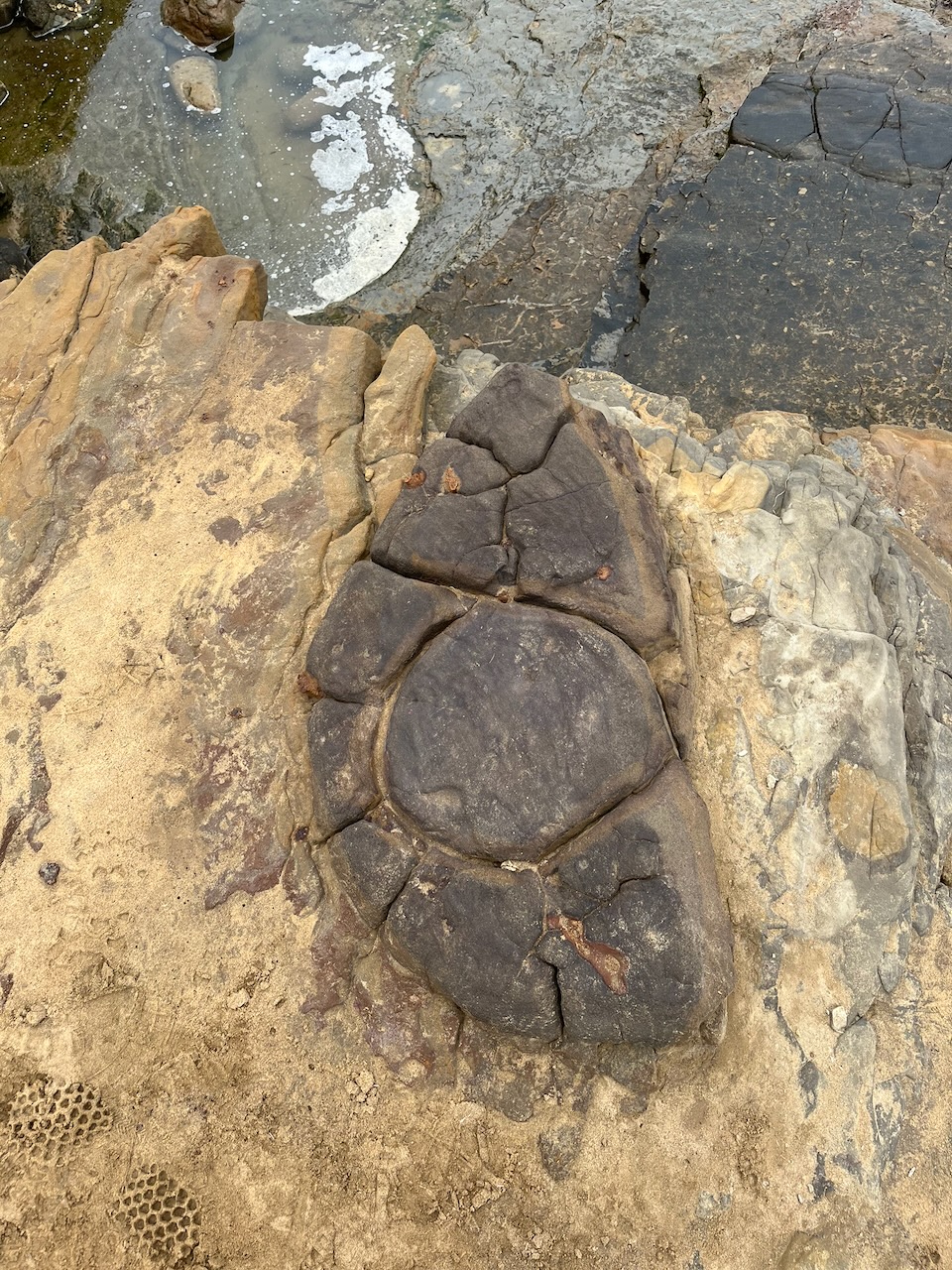
Why some concretions look like a crater
After a spherical concretion erodes or pops out of the rock, a hollow “socket” is left behind. Geologists call these “concretion molds” or “cups.”
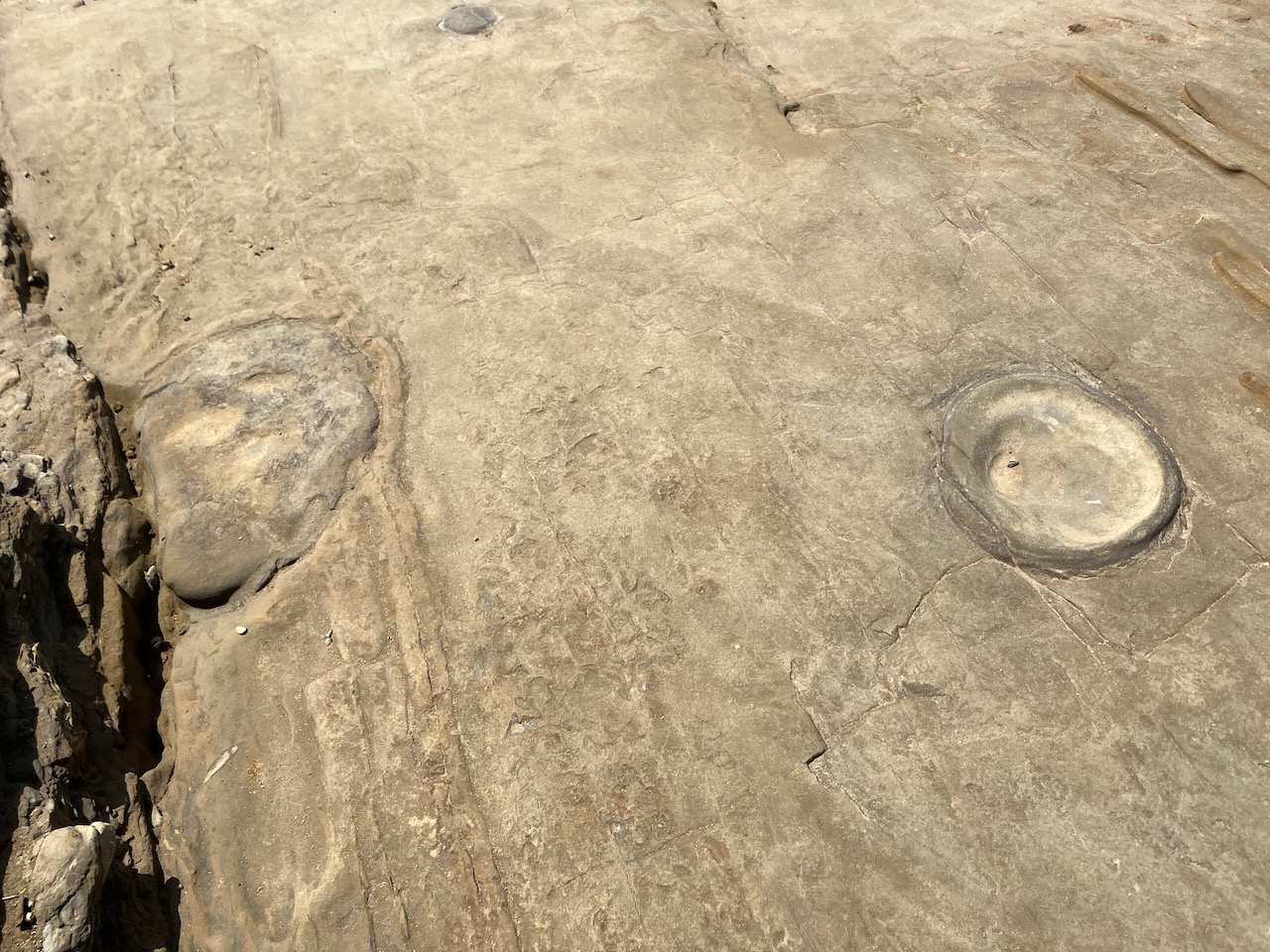
It looks like a crater because the concretion is harder and denser than the sandstone, and it often breaks away as a single piece when the surrounding rock weakens. You might notice a darker, rougher edge around the outside, which is the reaction rim, where the mineral cement was most concentrated at the edge between the concretion and the sandstone.
Over time, waves and salt spray gently “sand” down the inside of the hole, giving it a smooth, bowl-like shape.
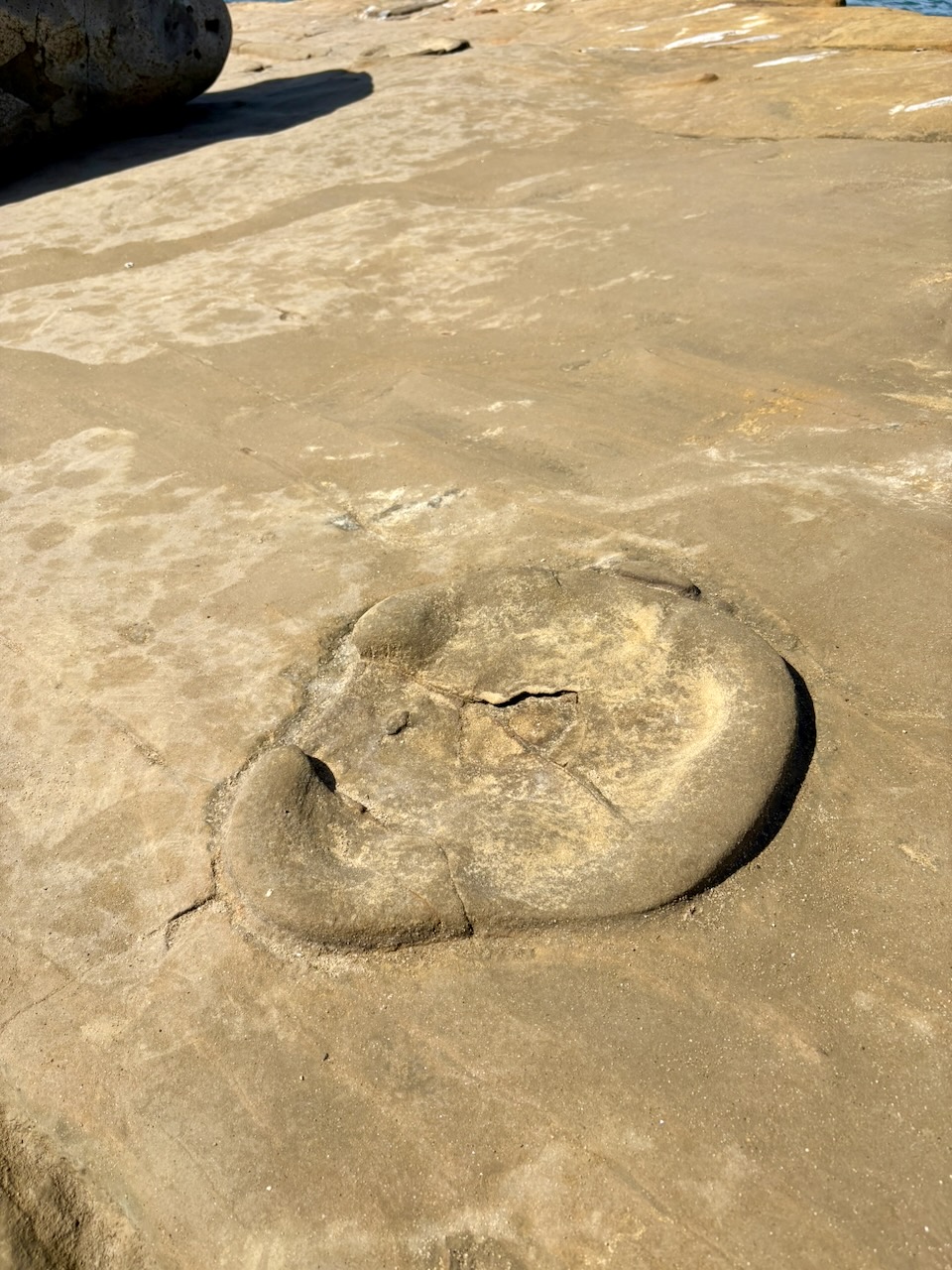
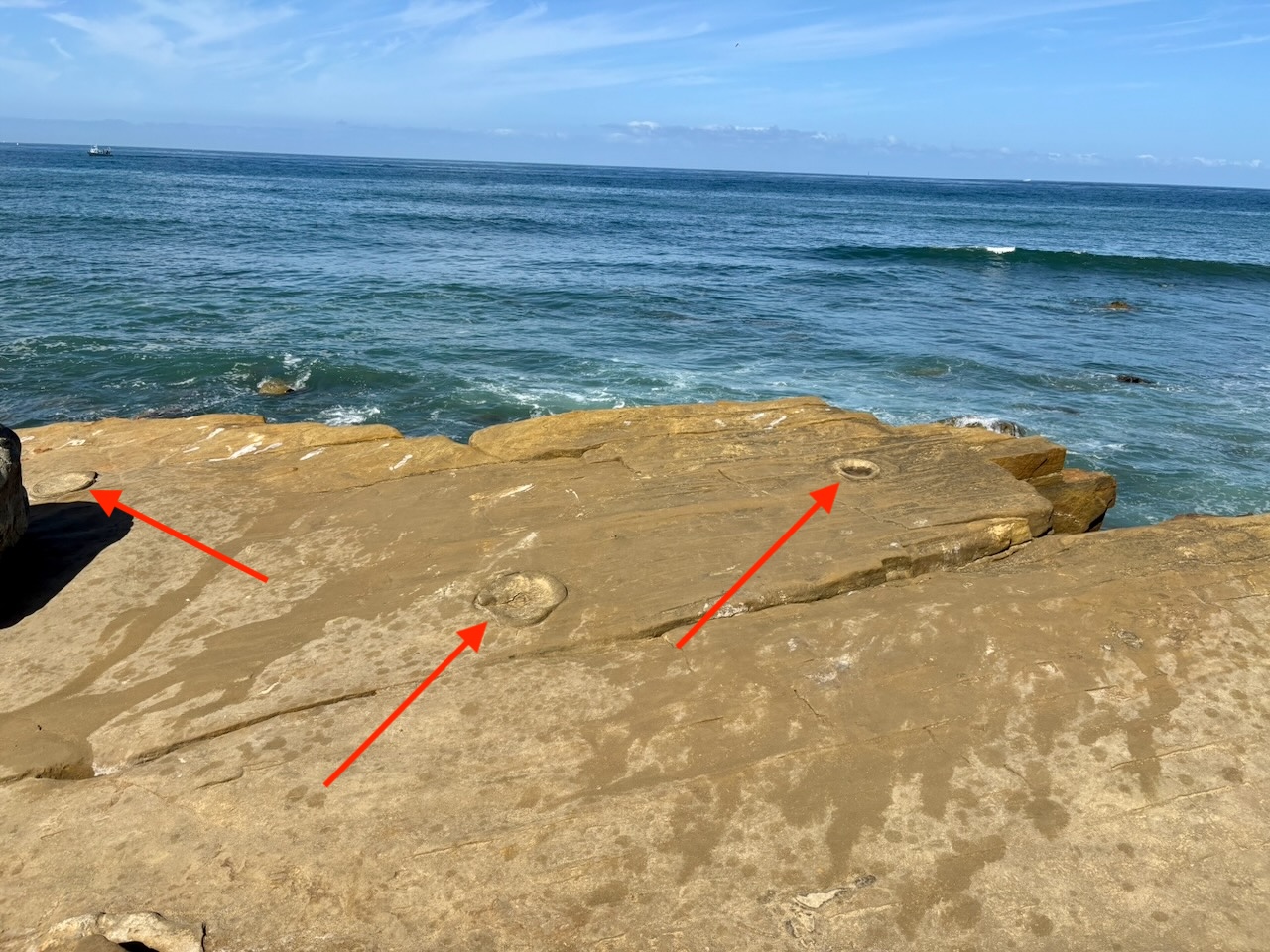
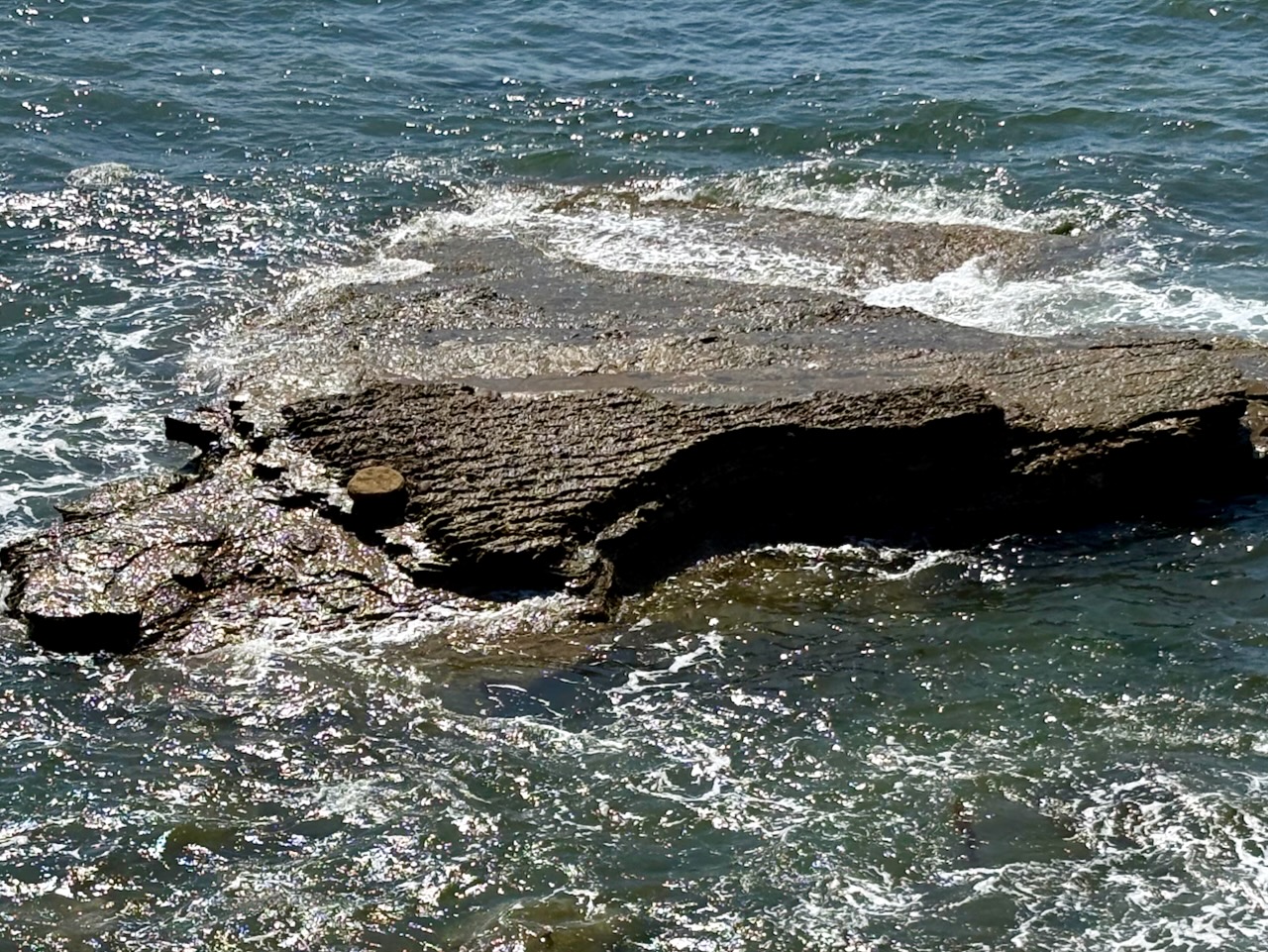
Here are some other examples of concretions around the Coastal Trail at Cabrillo. Can you find more? Keep a lookout as you explore the Coastal Trail.
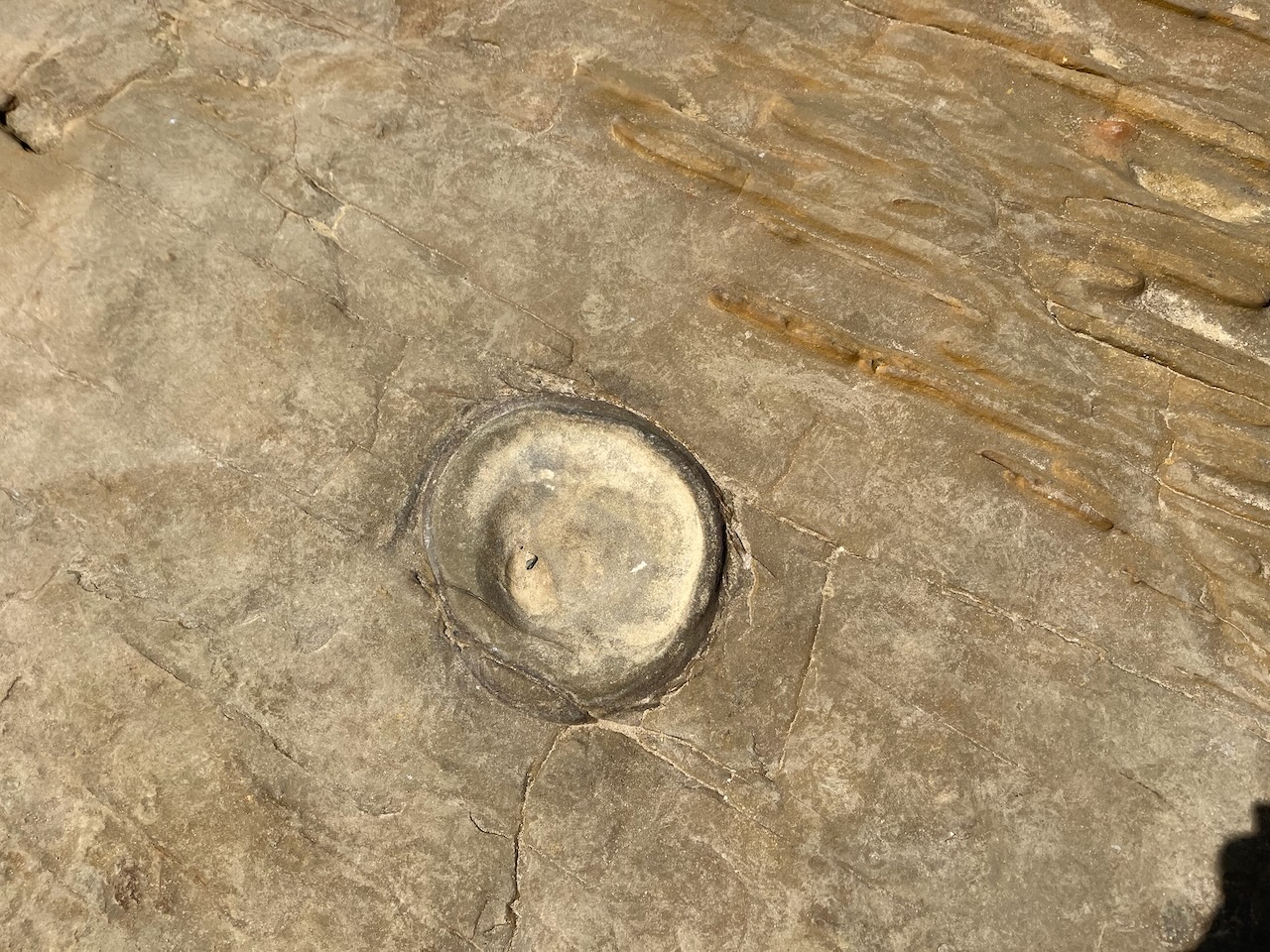
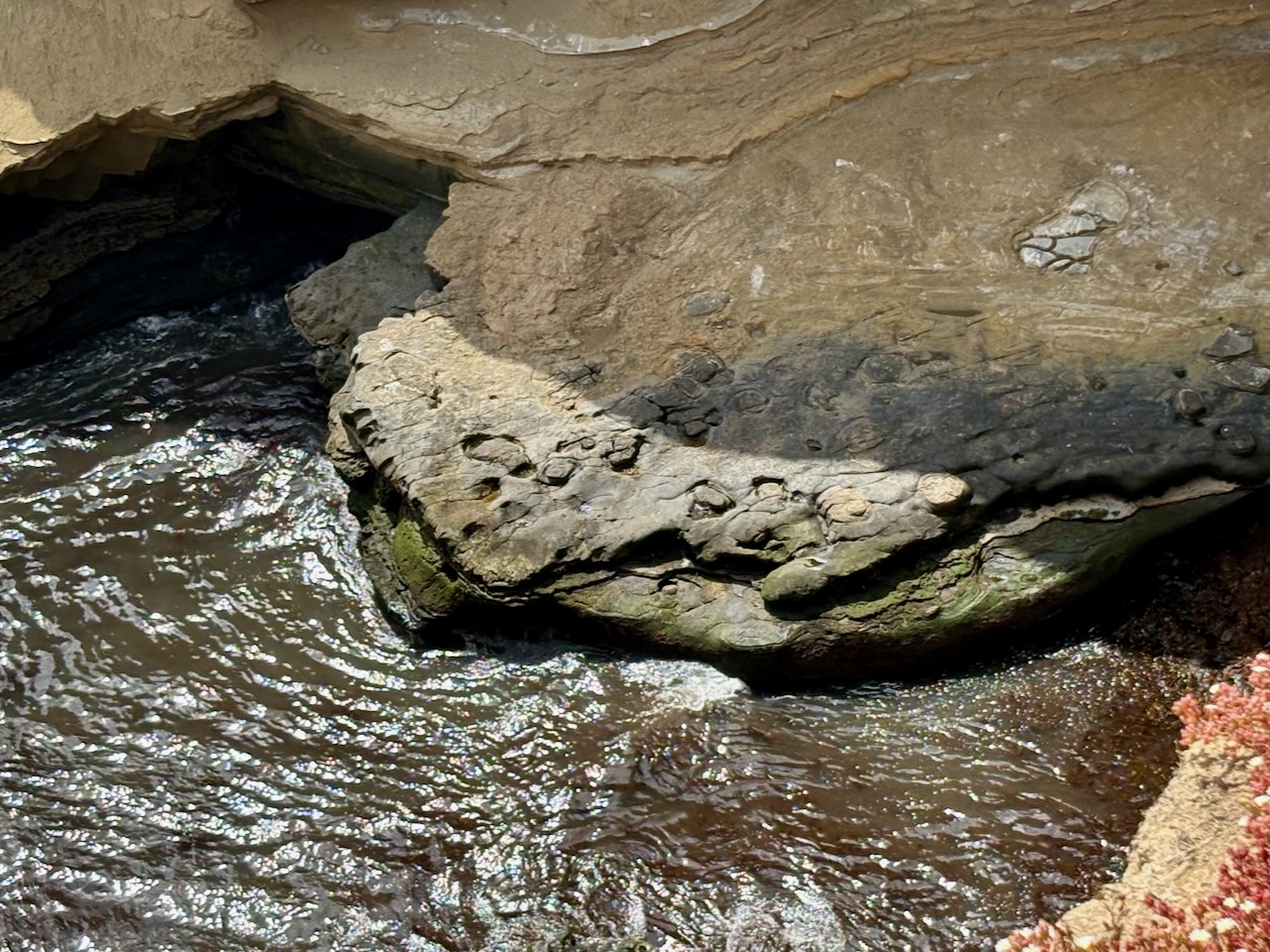
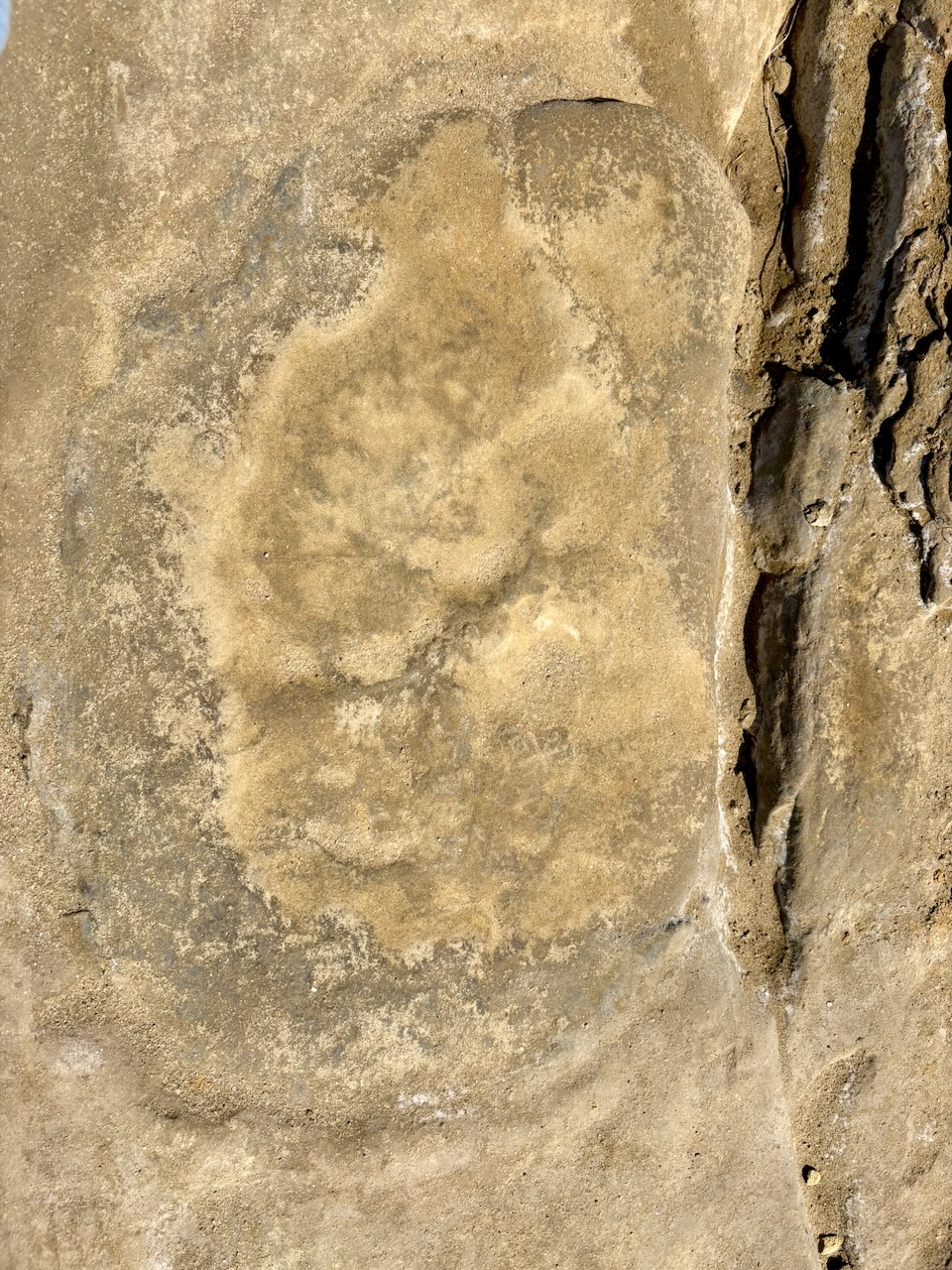
You can read more about the geology of the area from the Geology Field Guide.


Fascinating!
—
Emily @ CNMFhttps://www.cnmf.org/
Thanks, very interesting. I do know one of these formations near the entrance is where a huge rock used to sit that is now below in the water. I was volunteering in tidepools when it became wobble so after hours several staff used tools to loosen & push over the edge. Tavio was one of staff.
I remember that too. Great article. Visitors are often asking about these.
thanks