


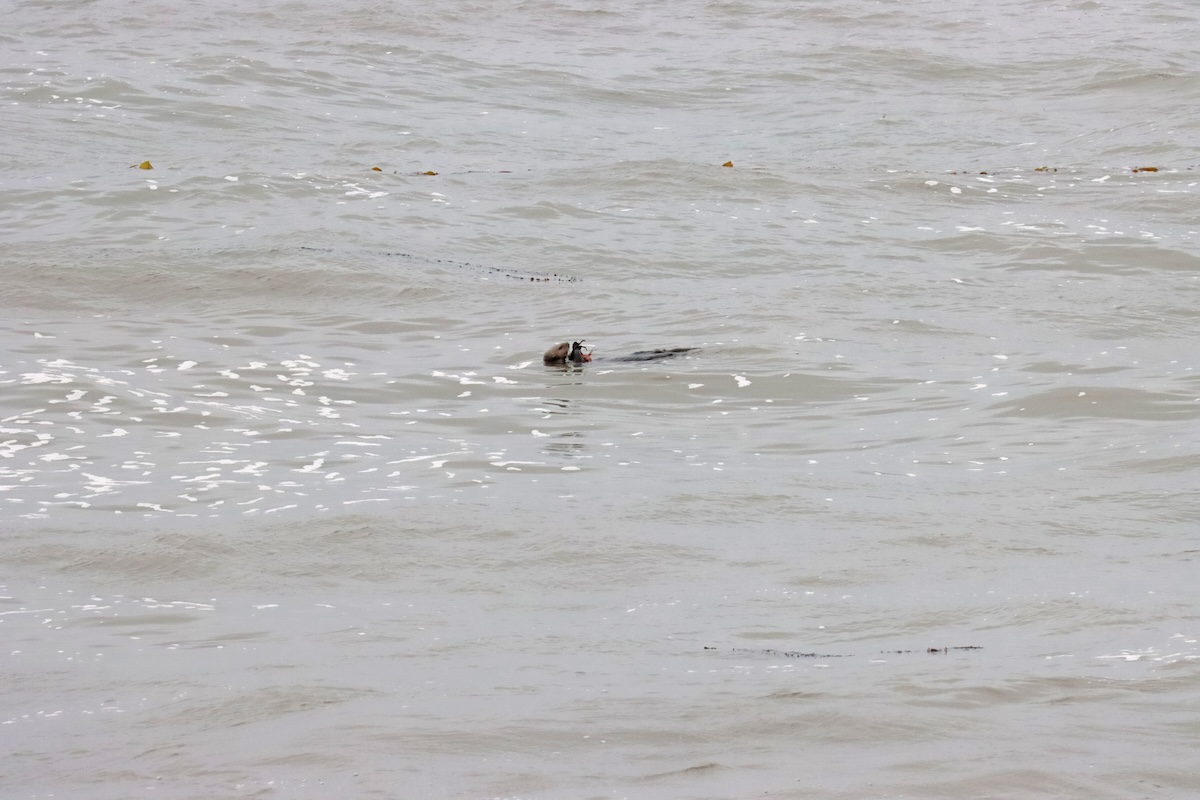
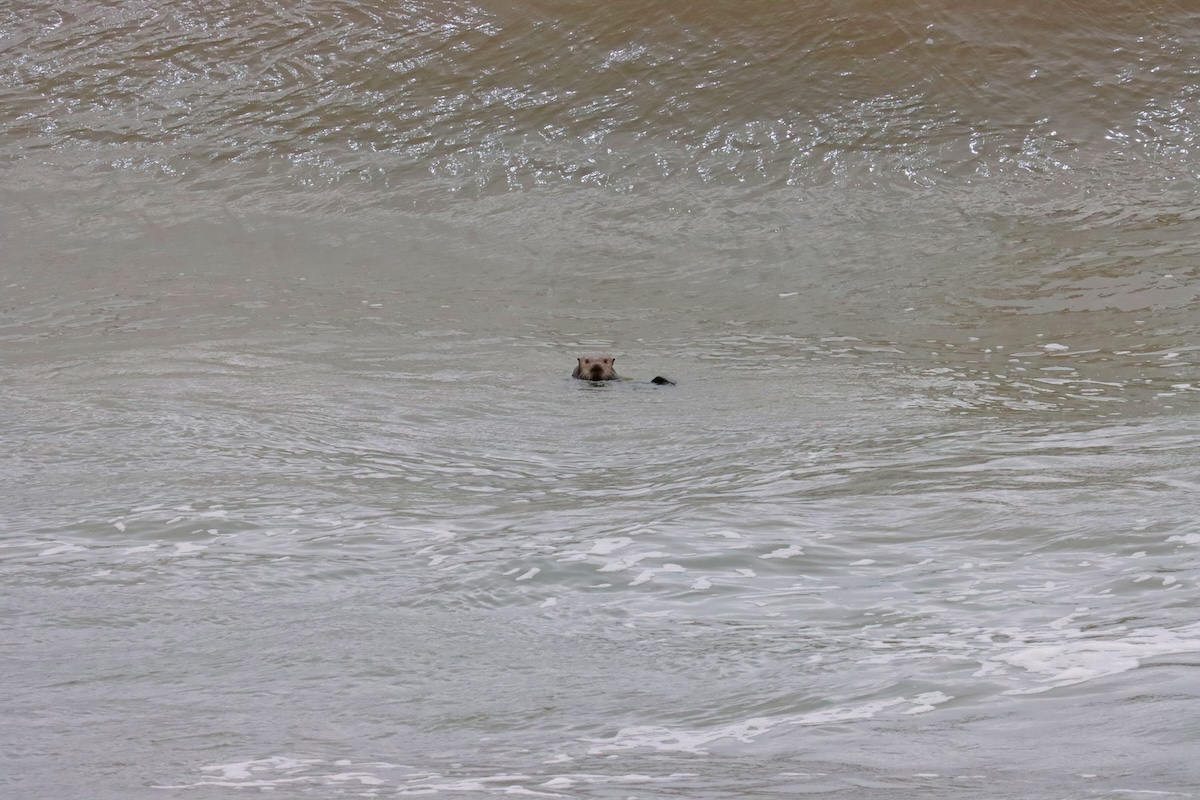
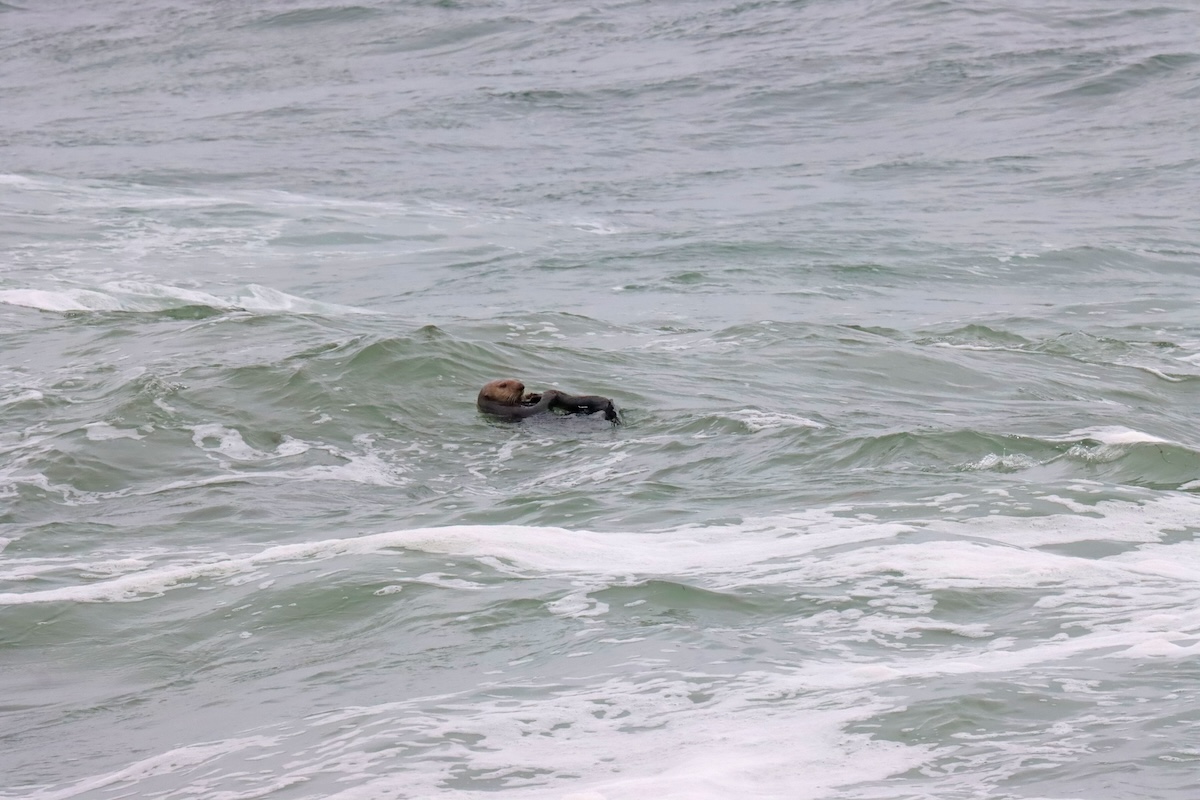
On Sunday, June 16, 2024, a sea otter was observed hanging around the tidepools for the afternoon. Otters haven’t been seen at Cabrillo since at least 2007 or 2008, so this was indeed a rare and fun sighting. Visitors were thrilled to watch the otter float on its back, occasionally diving to bring up a lobster to munch on.
Otters are mainly found off the coast of Central California these days, but we are glad to see one here. Hopefully there is more than one and we will start to see more of them.
Below is a sampling of photos that TPERP Coordinator Pauline took. She still has hundreds of photos to look through, but she wanted to share a few of them for everyone to see.






 CNM VIP Voice
This is beyond cool. Thanks for posting!
Why do they prefer more northerly areas and not SoCal?
Here are some reasons why sea otters are not abundant in Southern California:
Historical Hunting: Sea otters were extensively hunted for their fur during the 18th and 19th centuries. This dramatically reduced their population, and even though hunting has been banned, the population has been slow to recover.
Limited Range Expansion: The current population of sea otters in California is mostly concentrated along the central coast. The range expansion to the south has been limited, potentially due to habitat preferences or competition for resources.
Environmental and Ecological Factors: Southern California has different environmental conditions compared to central and northern California. There might be less suitable habitat, fewer kelp forests (which are essential for otter habitat), or more competition and predation from other marine species.
Human Activities and Pollution: Southern California is more densely populated and industrialized. Pollution, coastal development, and increased human activity can negatively impact sea otter populations. Oil spills, in particular, pose a significant threat to sea otters, as their fur loses its insulating properties when contaminated with oil.
Disease: Sea otters are vulnerable to several diseases, some of which can be exacerbated by pollution and runoff from urban areas. For example, Toxoplasma gondii, a parasite often found in cat feces, can be washed into the ocean and has been linked to sea otter deaths.
Shark Predation: There has been an increase in shark predation on sea otters in some areas, which can impact their ability to expand their range.
These factors collectively contribute to the limited abundance of sea otters in Southern California. Conservation efforts continue to address these issues, aiming to support population recovery and range expansion.
Thanks Dan,
I got this question the just the other day from a visitor.